
Stripe looks cheap when you're small. Then volume grows, and Stripe fees SaaS teams once ignored become a real margin problem.
For many subscription businesses, the posted card rate is only the starting point. Billing, cross-border charges, FX, and disputes can push SaaS payment processing costs much higher. You don't need a dramatic processor switch to improve margins, but you do need leverage.
Start With a Real Stripe Fee Breakdown
As of April 2026, many US accounts still start at 2.9% + 30¢ for domestic online card payments. Subscription businesses may also pay 0.5% to 0.8% for Billing. International cards can add 1% to 1.75%, currency conversion can add 1% to 2%, ACH often sits at 0.8% capped at $5, and disputes commonly cost $15. Your actual Stripe fees can vary by region, account profile, and contract.
That makes a clean Stripe fee breakdown more useful than the headline rate. Pull at least 90 days of data, then split costs by domestic and international volume, monthly and annual plans, card and ACH, failed retries, and disputes. A simple Stripe fee calculator helps, but cohort-level analysis is better.
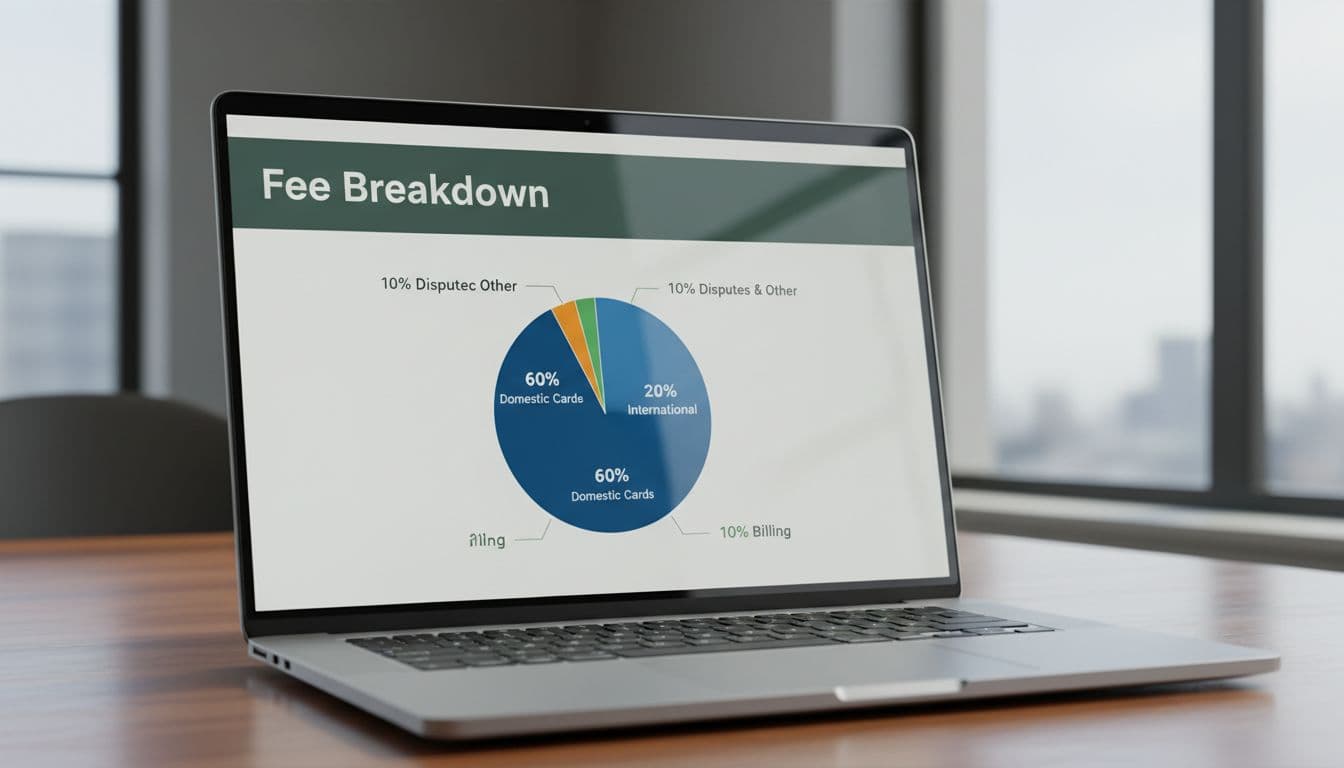
Look at your effective rate by segment, not only total fees divided by total payments. A $20 self-serve plan gets hit much harder by the fixed 30¢ than a $2,000 annual contract. That one view often shows where Stripe processing fees SaaS teams pay are drifting above plan.
If you want a faster baseline, FeeTrace features for Stripe fee reduction can surface fee drivers by geography, payment method, and transaction size, and you can Analyze My Fees once you want a clearer starting point.
If you can't show where the extra basis points come from, Stripe has little reason to change your terms.
Build Leverage Stripe Will Take Seriously
Stripe rarely changes pricing because a founder says fees feel high. It responds when the account looks bigger, safer, and more durable next year than it does today.

Bring these points into the conversation:
- The last 6 to 12 months of volume, plus a believable growth forecast
- A low dispute rate and low fraud loss
- Stable retention, especially on annual or multi-year plans
- A stronger enterprise customer mix with larger invoices
- Use of multiple Stripe products, such as Payments and Billing
- A clear plan to move some volume to ACH or local methods where it fits
That last item matters more than most teams think. If you're willing to help lower network costs and reduce risk, your request sounds commercial, not emotional. That's the heart of how to reduce Stripe fees in a way Stripe will take seriously.
Ask for a pricing review with your rep or sales contact, then send your numbers in writing. A live call helps, but written follow-up gives Stripe something clear to price and compare.
You can keep the email short:
We're processing about $X per month, growing Y% year over year, with low disputes and stable retention. We use Payments and Billing today, and we're planning more enterprise volume plus more ACH where it fits. Could your team review our pricing across card, Billing, and cross-border fees?
This pattern shows up in a recent SaaS founder discussion where fees only felt urgent after scale. If you need help packaging the data behind your ask, How FeeTrace analyzes Stripe fees step-by-step is a useful starting point.
Ask for a Pricing Review, Not Only a Lower Card Rate
Don't ask only for a lower domestic card rate. Ask for a wider pricing review across the fee lines that hit recurring revenue businesses hardest.
A broader request usually looks like this:
| Area | What to ask for | When it matters most |
|---|---|---|
| Card processing | Lower percent, lower fixed fee, or both | High monthly volume and steady ticket sizes |
| Billing | Reduced add-on pricing | Heavy subscription volume |
| International and FX | Better cross-border or conversion terms | Global customer base |
| ACH or bank debit | Better pricing and launch support | Larger B2B invoices |
| Radar, invoicing, or platform fees | Bundles, waivers, or custom terms | Low-risk, multi-product use |
The takeaway is simple: more than one fee line may be negotiable, depending on your profile.
Timing also matters. Ask after a clean quarter, a product expansion, or a strong renewal cycle, not during a fraud spike or support issue. Fresh data helps your case.
This is also where Stripe vs PayPal fees can help as a benchmark, but don't use that comparison as a bluff. Most teams know a processor move is slow, risky, and full of hidden work. For a second-source view of the 2026 fee stack, see this 2026 Stripe fee guide.
Most importantly, verify current Stripe terms directly with Stripe and your contract. Rates can change by country, merchant profile, product set, and committed volume. If you're trying to lower Stripe fees, your best move is to show your true cost structure first, then ask for pricing that matches your mix.
The strongest negotiation is usually the least dramatic. Bring a hard number, a clear growth story, and a low-risk account profile.
That shifts the conversation from "fees feel high" to "this account deserves a review." If you want to size the upside before that call, compare likely savings against transparent pricing that recovers fast.