
A $3 sale can carry a fee rate that feels more like a tax than a payment cost. That's the problem with Stripe fees on small transactions, the fixed fee hits harder as the order total drops.
If you sell low-cost products, monthly add-ons, digital downloads, or starter SaaS plans, the goal isn't to erase Stripe's fixed fee. You usually can't. The goal is to make that fixed fee matter less by changing pricing, packaging, billing cadence, and payment mix.
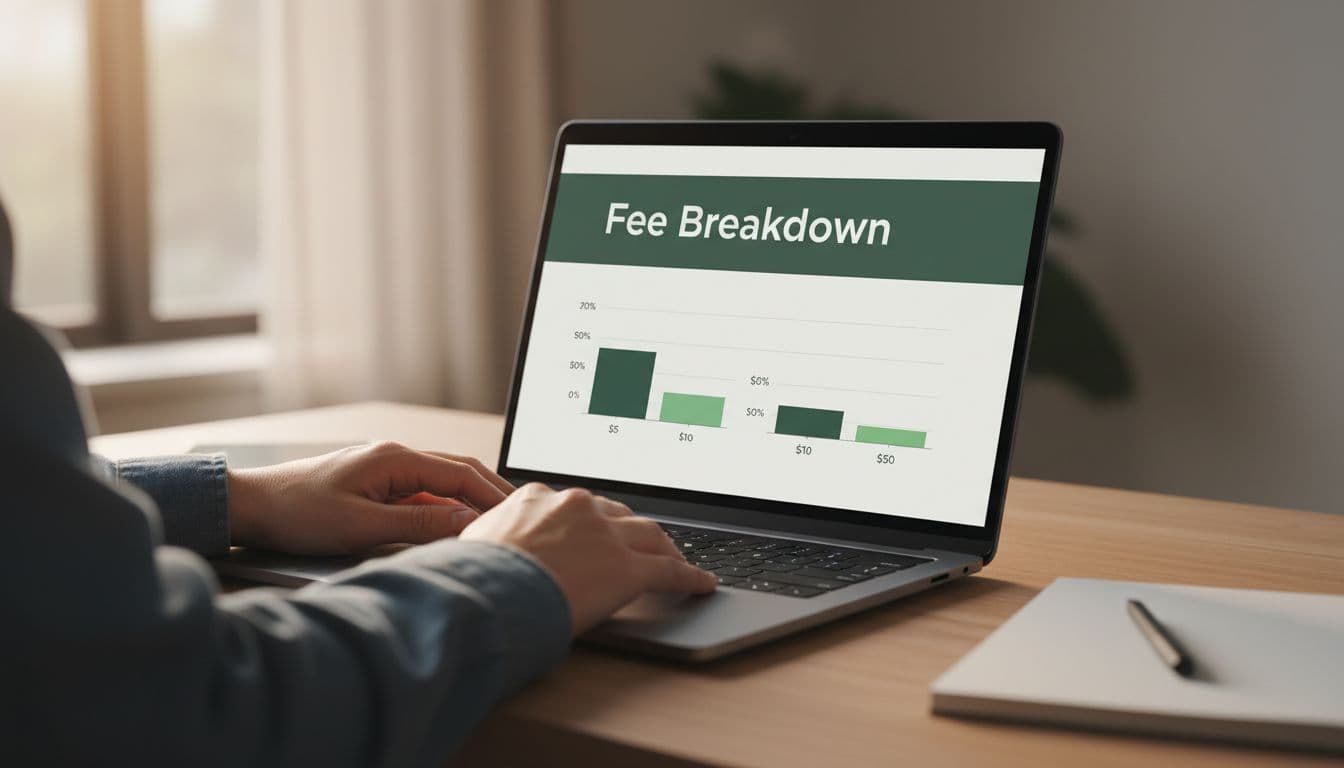
Start with the real Stripe fee breakdown
As of April 2026, Stripe's standard online card price in the US is 2.9% + 30¢ per successful transaction. Other countries can differ, and extra charges may apply for international cards, currency conversion, or manually entered cards. In other words, always check your local Stripe pricing and rules.
That simple rate hides the real issue. On small charges, the 30¢ fixed fee does most of the damage. This is the heart of any Stripe fee breakdown.
Here's what that looks like for common ticket sizes in the US:
| Sale amount | Fee at 2.9% + 30¢ | Effective fee rate |
|---|---|---|
| $3.00 | $0.387 | 12.9% |
| $5.00 | $0.445 | 8.9% |
| $10.00 | $0.59 | 5.9% |
| $50.00 | $1.75 | 3.5% |
The takeaway is simple. Your percentage rate hasn't changed, but your effective rate swings wildly.
On a $5 payment, the fixed 30¢ often hurts more than the percentage fee.
A basic Stripe fee calculator is useful for testing one payment at a time. Still, single examples don't show which products, customer groups, or price points are dragging your margin. That's where deep fee archaeology by transaction size becomes useful, because it shows where the small-ticket pain is concentrated.
For founders tracking Stripe processing fees SaaS teams worry about, this is often the first surprise. The cheapest plan isn't always the most profitable one.
Practical ways to reduce Stripe fees without changing processors
The best answer to how to reduce Stripe fees on small transactions is usually to raise the average amount per charge. Think of it like carrying groceries. One big bag is easier than five tiny bags, even if the total weight is the same.
Increase prices slightly, or set a sensible minimum
A small price move can help more than it seems. If a product costs $5, the fee is about 44.5¢. Raise the price to $5.50, and the fee becomes about 46¢. Your fee barely rises, but your margin improves.
That doesn't mean every merchant should raise prices. Test carefully. For low-cost ecommerce, a card minimum or free shipping threshold can work better than a blunt price increase. If your average order is $6, moving buyers to a $10 minimum can cut the effective fee rate fast.
Be careful with pass-through fees or surcharges. Rules can vary by country, card network, business type, and local law. Stripe also has its own requirements. Verify what's allowed with Stripe and your legal or payments advisor before changing checkout language.
Bundle small items and reduce billing frequency
Bundling is one of the cleanest fixes. If you sell stickers, templates, add-ons, or credits, don't push every tiny purchase through checkout by itself. Sell packs.
A creator selling three $4 products separately pays about $1.25 in total fees. Bundle them into one $12 order, and the fee drops to about 65¢. Revenue stays the same, but the fixed fee lands once instead of three times.

This matters even more for subscriptions. Many SaaS payment processing costs climb because founders bill too often. A $10 monthly plan charged 12 times creates about $7.08 in annual card fees. Charge $120 once per year, and the fee is about $3.78. Even after offering a discount for annual billing, you may come out ahead.
That shift also helps cash flow, churn, and support load. For many software companies, annual billing is a margin fix hiding in plain sight.
Use lower-cost payment methods for bigger payments, then measure what changed
Cards are convenient, but they aren't always the cheapest rail. If you invoice clients, sell B2B services, or collect larger renewals, offer bank-based methods where available. In many cases, ACH or direct debit costs less than cards, so the fixed-fee problem shrinks.
Invoicing can help here. A $2,000 services payment processed by card can rack up a much larger fee than a bank payment. For agencies, consultants, and higher-ticket SaaS accounts, invoicing large renewals instead of forcing card checkout is often the easiest win.
Some merchants compare processors and ask about Stripe vs PayPal fees. That's fair, and NerdWallet's Stripe vs. PayPal comparison is a decent starting point. But switching providers doesn't always solve the small-order math. If your average payment is tiny, the real fix is often order size, payment type, or billing cadence.
Once you change anything, measure it. Watch fee rate by transaction size, product, and payment method. That's how you find out whether your new bundle, annual plan, or invoice flow helped. If you want a faster view, how FeeTrace connects to Stripe and analyzes fees shows the process, and you can also Analyze My Fees to see where your actual margins are slipping.
You probably don't have a payment-processor problem. More often, you have a small-transaction problem.
The fix is rarely dramatic. A modest price increase, a bundle, an annual plan, or a better payment-method mix can lower the impact of Stripe fees without hurting growth.
Pick one change, test it for 30 days, and then check your effective fee rate. That's where the real savings show up.