
A chargeback rarely costs your SaaS business only $15. For finance teams, Stripe chargeback fees are easy to spot, but the larger hit often sits in reversed revenue, network charges, and staff time.
If you run subscriptions, small disputes stack up fast. A few forgotten renewals or weak billing descriptors can quietly squeeze margin. Here is the practical cost view your controller, revops lead, and billing owner need.
What Stripe chargeback fees actually include
As of April 2026, Stripe's standard dispute fee is $15 per chargeback. Stripe also removes the disputed amount from your balance while the case is open. Those charges sit on top of normal Stripe fees for the original payment, not inside them.
Stripe added a separate $15 counter-dispute fee in 2025 for merchants that challenge a dispute and lose. If you win, that counter-dispute fee is refunded. If you use Smart Disputes, Stripe skips that extra fee, but takes 30% of the funds recovered. Stripe may also waive the first fee when a case ends before it becomes a formal chargeback, and winning merchants often see the base fee returned, although that can vary by region and setup.
Card products, local payment methods, account terms, and country-specific rules can change the details. For the current baseline, check Stripe's pricing page and the dispute terms tied to your account.
This quick table shows the most common fee paths.
| Scenario | Stripe platform fees | Other direct costs | Likely finance impact |
|---|---|---|---|
| You accept the dispute | $15 dispute fee | Disputed amount, possible network assessment | Fast resolution, but lost revenue |
| You fight and win | $15 fee may be refunded, depending on setup | Internal review time, possible Smart Disputes recovery share | Revenue can return, labor cost remains |
| You fight and lose | $15 dispute fee plus $15 counter-dispute fee | Disputed amount, possible network assessment | Highest direct cash hit |
| Inquiry ends before formal chargeback | Often no dispute fee | Support time | Cheapest outcome if resolved early |
Most of this applies to card disputes. ACH, wallets, buy now pay later, and local rails can use different reversal rules, so confirm the current policy before you put assumptions into a forecast.
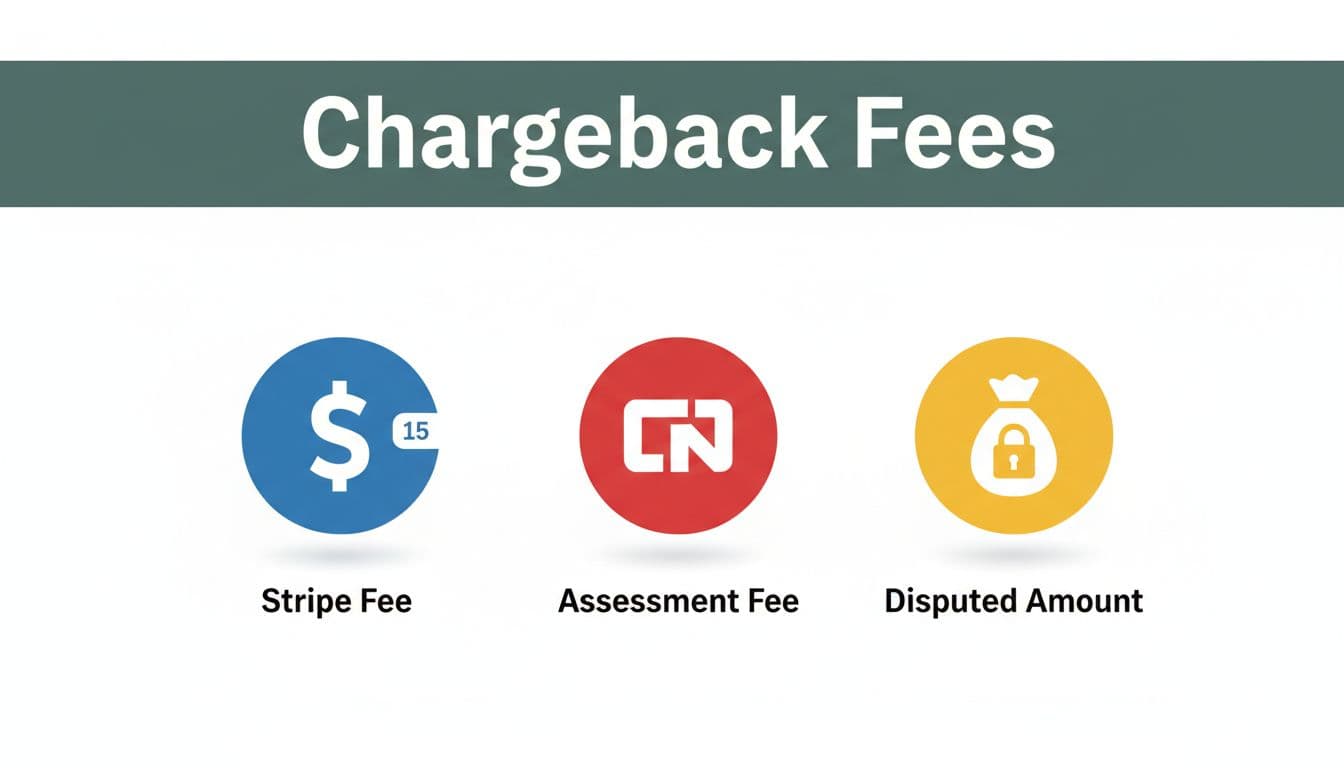
The $15 fee is the visible part of the problem. The real cost starts after the dispute lands.
Why chargebacks distort SaaS payment processing costs
For subscription businesses, a dispute has three cost layers. First, there are Stripe platform charges, the fee, the temporary debit, and sometimes the counter-dispute or Smart Disputes pricing. Second, there are card-network assessment costs. Stripe may pass through network-related dispute costs, but those can vary by issuer, card brand, region, and contract, so they aren't as easy to benchmark.
Third, there are internal costs. Your team gathers invoices, login history, renewal notices, and cancellation logs. Finance updates cash forecasts. Support handles the customer relationship. Revops may need to fix dunning, billing copy, or CRM sync issues. That time rarely shows up in a clean Stripe fee breakdown, yet it still raises SaaS payment processing costs.
Take a $49 monthly subscription. If the customer files a chargeback and you accept it, the direct hit is at least the $49 plus the $15 Stripe fee, before any network cost or labor. If you contest and lose, the direct hit can reach $79 before internal work. Multiply that across a few dozen cases and the impact stops looking like noise.
From a close-process view, chargebacks also distort net revenue timing. The debit hits now, the decision comes later, and any recovery may land in a different month than the original renewal.
This is why the Stripe processing fees SaaS teams budget each quarter often understate the true payment bill. Chargeback rates also matter because high levels can trigger monitoring or reserves. Thresholds vary by network program, but merchants often try to stay below roughly 0.65% to 0.9%, as explained in this current dispute-rate guide.
If you want to see which plans, geographies, or payment methods are pushing your effective rate up, review FeeTrace features for Stripe fee optimization or Analyze My Fees to spot the biggest margin leaks faster.
How the dispute lifecycle works for recurring billing
A recurring chargeback rarely starts with fraud alone. More often, it comes from vague descriptors, trial-to-paid confusion, missed cancellation expectations, or a customer who doesn't recognize a renewal.
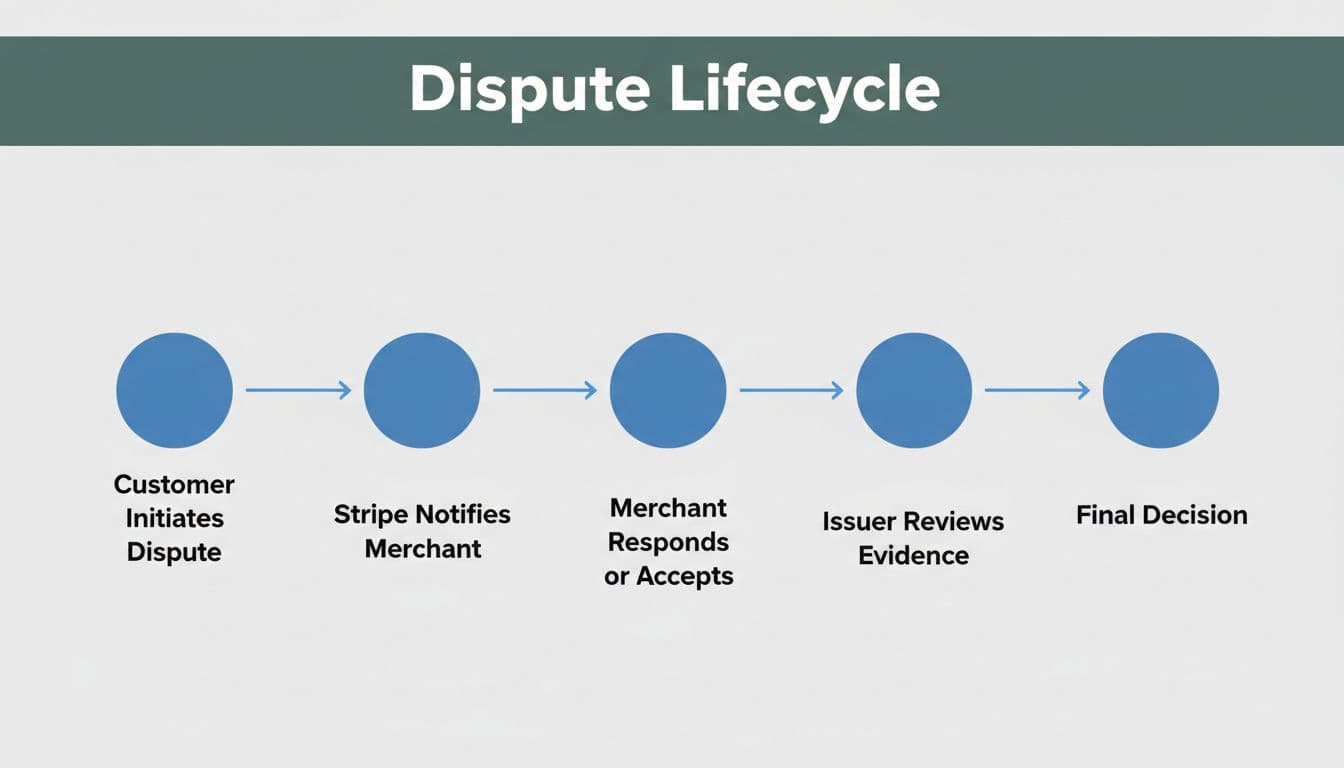
The five-step dispute path
- A customer disputes a renewal with their bank or card issuer.
- Stripe notifies you, removes the disputed amount, and applies the dispute fee.
- Your team chooses to accept the loss or submit evidence. Response windows often run 7 to 21 days, depending on the network and reason code, as outlined in this Stripe dispute guide.
- The issuer reviews the case. If you use Smart Disputes, evidence handling and pricing differ.
- A final decision arrives. Funds and some fees may return if you win, but outcome rules can differ by region, payment method, and account setup.
A short checklist for reducing chargebacks
For most teams, how to reduce Stripe fees starts with stopping preventable disputes. A basic Stripe fee calculator can price one transaction, but it won't show why recurring charges get challenged.
- Make billing descriptors easy to recognize, and send clear renewal reminders.
- Keep cancellation paths simple, and sync product, support, and billing records.
- Save reusable evidence packs for subscriptions, including invoices, login history, and policy acceptance.
- Track disputes by plan, country, card type, and retry status, not only by total count.
- When comparing Stripe vs PayPal fees, include dispute handling and ops time, not only the headline rate.
That matters for forecasting because fewer disputes lower direct losses and shrink avoidable review work. If you want a tool-level view of dispute savings versus software cost, check FeeTrace ROI and pricing details.
A clean view of Stripe chargeback fees can change how you manage margin. The key takeaway is simple: don't treat disputes as a support issue with a $15 fee attached.
Treat them as a unit cost inside your broader payment system. Once you separate platform fees, network costs, and internal labor, the next action usually becomes obvious.
Before the next board pack, pull one simple report: disputes by plan and renewal cohort. If the same cohort keeps surfacing, that's where your next fix will pay back first.