Stripe Financial Connections usually doesn't show up as a separate line item, but that doesn't mean it has no cost impact. The bigger issue is the payment mix around it, because that's what changes your effective rate.
For SaaS teams, Stripe processing fees SaaS businesses pay in 2026 are rarely just the headline card rate. International cards, recurring billing, tax tools, fraud checks, and payout choices can all push the bill higher.
The safest way to read Stripe is to treat every charge like part of a stack. Once you do that, the numbers get a lot clearer.
Does Stripe Financial Connections have a separate fee?
The short answer is no, not as a public standalone fee. Stripe Financial Connections is part of the broader Stripe product set, so you won't usually find it listed the way you find card processing or chargeback fees.
That matters because SaaS owners often assume a feature is cheap when the feature itself has no obvious line item. In practice, the cost shows up through the payment path it supports. If it helps move customers into bank-based payments, the savings or cost depends on that method, not on a Financial Connections fee.
If your SaaS also uses Connect, Stripe's Connect pricing page and connected accounts guide explain how the bill can land on the platform or the connected account. That setup changes the way you think about Stripe fees.
If a fee doesn't show up as a separate line, it can still show up in your margin.
A Stripe fee breakdown SaaS teams should watch
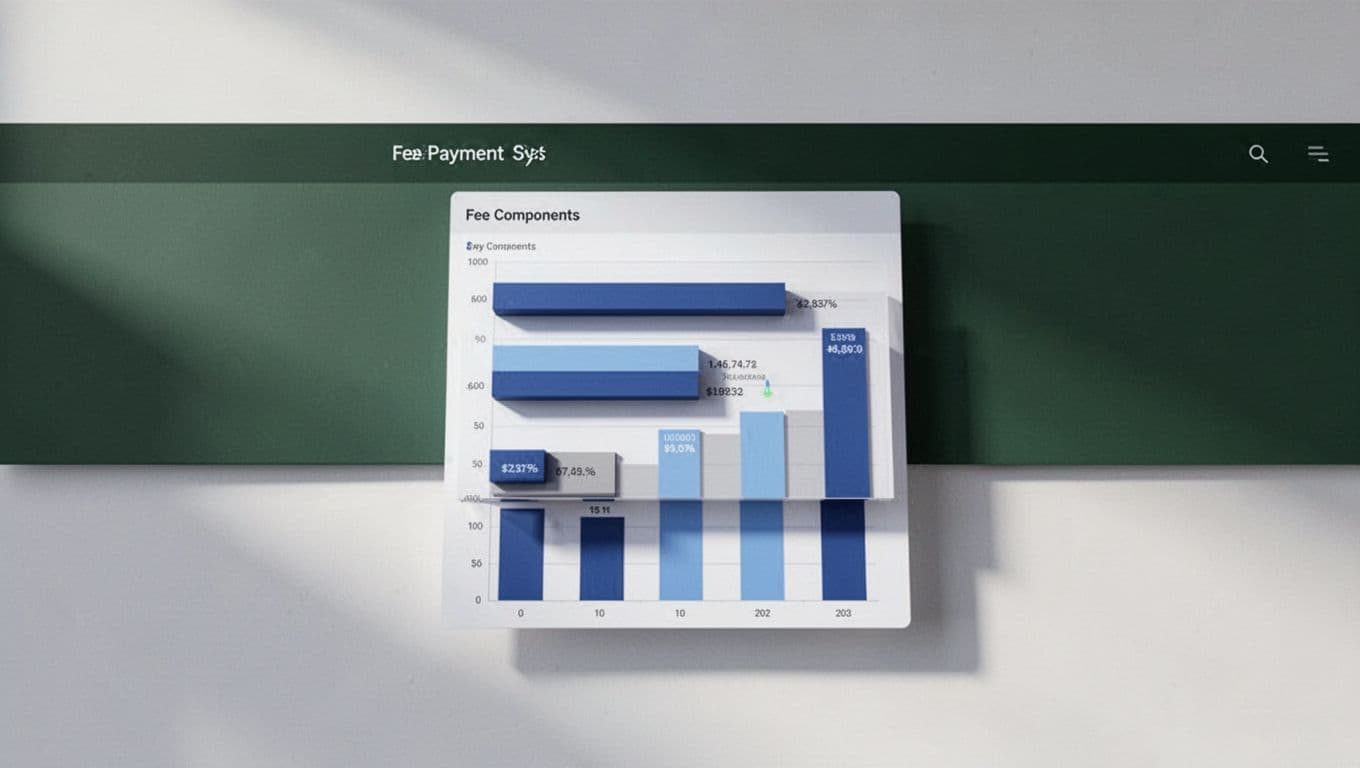
A quick table makes the moving parts easier to see.
| Fee item | 2026 cost | Why it matters for SaaS |
|---|---|---|
| Financial Connections | No separate public fee | It usually sits inside the broader Stripe flow |
| Domestic cards | 2.9% + $0.30 | This is the baseline many teams start from |
| International cards | 4.4% + $0.30 | Cross-border revenue raises the effective rate fast |
| ACH direct debit | 0.8%, capped at $5 | Often cheaper for larger B2B invoices |
| Stripe Billing | 0.7% | Adds on top of recurring revenue volume |
| Stripe Tax | 0.5% | Easy to miss because it rides along with payments |
| Radar | 2 to 7 cents | Small per charge, but meaningful at scale |
| Chargebacks | $15 | A few disputes can erase a lot of margin |
| Instant Payouts | 1%, minimum $0.50 | Handy, but expensive if used often |
The pattern is clear. Stripe fees look manageable until add-ons, disputes, and cross-border volume start stacking.
A $100 domestic card payment costs $3.30. A $5 payment costs $0.44, which is almost 9%. That is why small-ticket SaaS plans can be harder on margin than annual contracts.
For teams that want a sharper view, AI-powered Stripe fee breakdowns help split costs by product, currency, payment method, and geography. That is the difference between seeing a blended average and seeing the leak.
Why a Stripe fee calculator only tells part of the story
A Stripe fee calculator is useful for a quick estimate. It is not enough for a SaaS business with mixed payment types.
Most calculators start with one transaction. Your actual bill comes from hundreds or thousands of charges, each with a different size, region, and retry pattern. That is where SaaS payment processing costs get distorted. One cheap method can look expensive once small invoices, FX, and chargebacks pile on.
The cleanest way to think about this is the effective rate:
effective rate = total Stripe fees / total processed volume
That number matters more than the advertised rate. A business with mostly U.S. cards may stay close to the headline number. A business with global subscriptions, failed retries, and billing add-ons will not.
For a deeper look at the data behind that number, how FeeTrace analyzes Stripe transactions breaks activity down by size, payment method, currency, product, and geography. That kind of view makes it much easier to spot where the margin is bleeding.
How to reduce Stripe fees without hurting conversion

The best answer to how to reduce Stripe fees is to attack the largest cost centers first.
- Route larger B2B subscriptions to ACH direct debit when customers can use it.
- Reduce international card share by pricing in local currency where it makes sense.
- Keep a close eye on Billing, Tax, and Radar, especially if another tool already covers part of the work.
- Tighten retry rules so failed payments do not create avoidable processing and support costs.
- Use Instant Payouts only when speed is worth the 1% fee.
That list is simple, but each item can move real money. A SaaS company with lots of small monthly charges may save more by changing payment methods than by shaving a tiny percentage from one fee line.
If you want to test whether those savings justify another tool, FeeTrace pricing and ROI calculator shows the math in plain terms. You can also Analyze My Fees and see where your own Stripe stack is leaking margin.
Stripe vs PayPal fees for SaaS subscriptions
The right way to think about Stripe vs PayPal fees is not to chase the lowest sticker price. It is to compare the full cost of getting paid.
Stripe usually gives SaaS teams more control over subscriptions, retries, invoicing, tax handling, and bank-based payments. That control matters when churn, failed payments, and international billing affect revenue.
PayPal can still make sense for some customer groups, especially when buyers already trust that wallet. However, recurring SaaS revenue often needs cleaner billing logic than a simple checkout flow. If your finance team wants fewer surprises, Stripe often gives you more visibility into the fee path.
For platform businesses, Stripe's platform pricing tool is also useful because it shows how application fees can recover part of the cost. That matters when your SaaS sits on top of connected accounts and needs a way to pass through or offset processing spend.
The practical test is simple. Compare your card mix, refund rate, international share, and support load before you compare headline percentages.
What SaaS teams should watch next
Stripe Financial Connections itself does not usually add a separate fee. The real cost shows up in the way payments move through the rest of the stack.
If you track effective rate by payment method, country, and product line, you will see the biggest leaks faster. That is where the real savings are, not in the advertised rate alone.
For SaaS teams, the smartest move in 2026 is to measure the full path, then cut the parts that do the most damage. That is how margin gets won back, one transaction at a time.