
A paid invoice can cost more than the rate on your pricing page suggests. For B2B SaaS teams, Stripe invoicing fees sit on top of payment processing, and sometimes next to subscription billing costs too.
That matters when you're billing monthly retainers, annual contracts, or global customers. Small invoice fees can stay small, or they can stack into a margin leak. Here's the clean math behind what you actually pay.
What Stripe invoicing fees cover in 2026
As of April 2026, Stripe lists Invoicing Starter at 0.4% per paid invoice, capped at $2. Stripe also offers a Plus tier at 0.5% per paid invoice. You only pay the invoicing fee when the invoice gets paid, which Stripe also confirms in its support note on invoicing pricing.
That fee is not the same thing as payment processing. If a customer pays an invoice by card, Stripe's standard online card rate is 2.9% + 30¢ for domestic cards. ACH is cheaper at 0.8%, capped at $5. International cards add 1.5%, and currency conversion adds another 1%.
A paid invoice can trigger two separate charges, the invoicing fee and the payment processing fee.
There's a third layer to watch. If you use Stripe Billing for recurring subscription logic, current pricing references put that fee at 0.7% of the subscription amount. Optional tools can add more. Stripe Tax starts at 0.5% on the basic version, Radar for Fraud Teams adds 2¢ per screened transaction, and disputes typically cost $15 if one hits.
For founders and RevOps teams, the practical point is simple. A clean Stripe fee breakdown must separate invoice software fees from the money-movement fee. If you want that split by payment rail, geography, and deal size, FeeTrace features for Stripe fee optimization are built for that exact job.
A Stripe fee breakdown for common B2B SaaS invoices
The easiest way to understand Stripe fees is to model a few common B2B SaaS cases.
| Scenario | Fee math | Total cost | | | | | | $499 monthly invoice, domestic card | Invoicing 0.4% = $2 cap nearly reached, card fee $14.47 + $0.30 | $16.77 | | $12,000 annual prepaid, domestic ACH | Invoicing capped at $2, ACH capped at $5 | $7.00 | | $12,000 annual prepaid, domestic card | Invoicing capped at $2, card fee $348 + $0.30 | $350.30 | | $3,000 invoice, international card with FX | Invoicing capped at $2, base card $87 + $0.30, intl $45, FX $30 | $164.30 |
The takeaway is hard to miss. On high-value invoices, the invoicing fee often becomes a footnote because of the $2 cap. The payment rail does the heavy lifting.
Take that $499 monthly invoice. The invoicing fee is about $2, but the card fee is $14.77. Your total is $16.77, or roughly 3.36%. If that same invoice runs through Stripe Billing, add another $3.49. Suddenly the collection cost is $20.26 on a single month of revenue.
Now compare annual prepay. A $12,000 ACH invoice costs only $7 in combined invoice and payment fees. The same $12,000 paid by card costs $350.30. That's a $343.30 difference on one contract, which is why B2B finance teams obsess over bank payments.
International invoices widen the gap. A $3,000 foreign card payment with currency conversion lands at $164.30 in total fees. For SaaS companies with strong overseas growth, that pushes SaaS payment processing costs up fast.
A basic Stripe fee calculator helps with quick estimates. Still, many tools miss the invoicing cap, the ACH cap, or the extra layers from Billing and FX. If you're comparing Stripe processing fees SaaS teams usually pay, start with payment method, invoice size, and customer location, not the headline card rate.
When invoicing is worth it, and how to reduce Stripe fees
Stripe Invoicing is usually cost-effective when your contracts are larger, your team needs approval trails, or buyers expect payable invoices instead of self-serve checkout. In those cases, 0.4% per paid invoice, capped at $2, is modest. For annual enterprise deals, the invoicing fee is often trivial.
The math changes when your invoices are smaller and card-heavy. A SaaS company sending hundreds of $100 to $500 monthly invoices can feel the 30¢ fixed fee, the card percentage, and any Billing add-on every single month. International card share makes that pain worse.
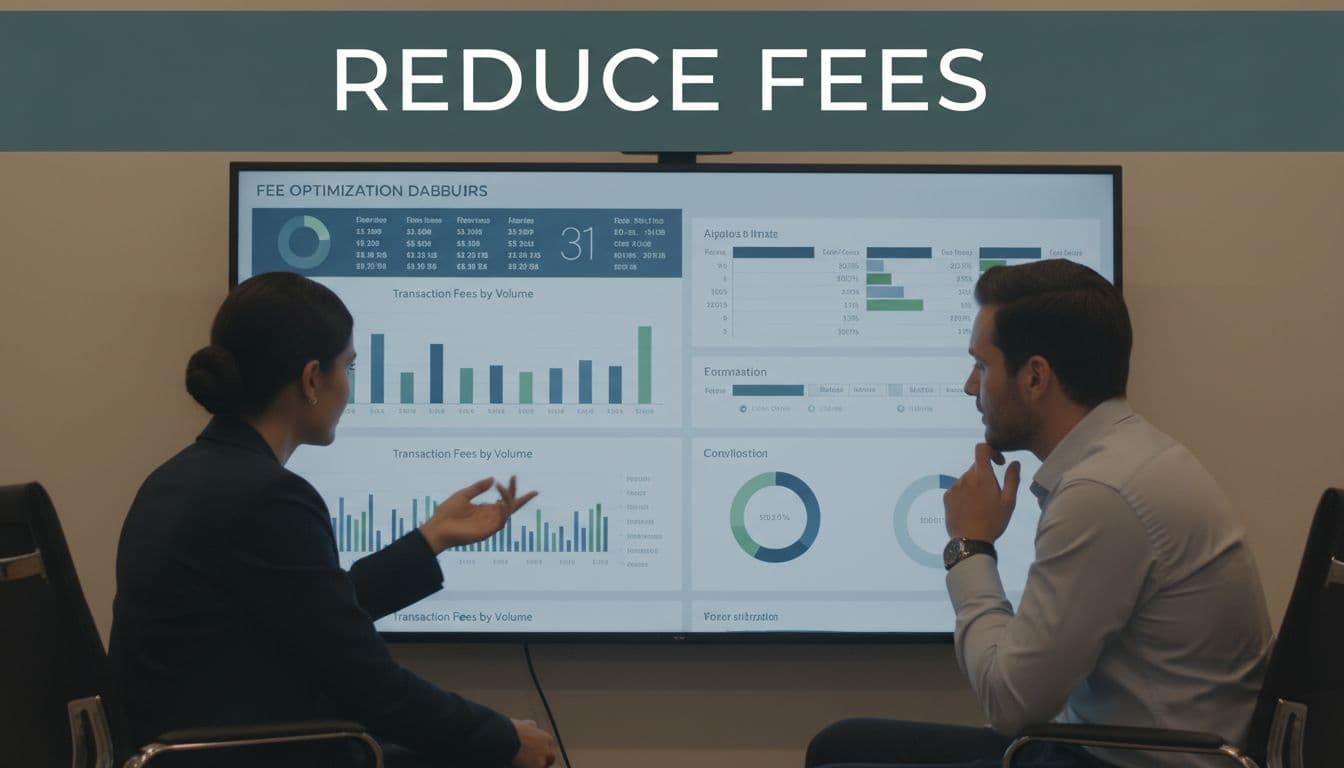
If you want to know how to reduce Stripe fees, start with behavior, not software settings. Push ACH for annual and high-ACV invoices. Offer local rails for international customers when possible. Review whether every recurring invoice needs Stripe Billing. Also, if volume is high enough, ask Stripe about custom pricing.
The Stripe vs PayPal fees debate comes up a lot in finance reviews. It's worth scanning a Stripe vs PayPal comparison for digital businesses, but B2B SaaS buyers shouldn't stop at headline rates. Approval workflows, ACH adoption, retries, and currency mix usually matter more.
Good decisions need transaction-level data. If you want to see how FeeTrace analyzes Stripe fees, or want to skip the guesswork and Analyze My Fees, look at your effective rate by invoice type, payment rail, and customer region.
The short version is this: Stripe invoicing fees are usually not the main cost. The real drag comes from the payment method layered underneath them.
That means the best savings usually come from changing how customers pay, not from avoiding invoices altogether. If your margins feel tighter than they should, your fee mix is probably telling you why.